The building tells you how it's used — if anyone's listening.
“we need to know how the building is used”
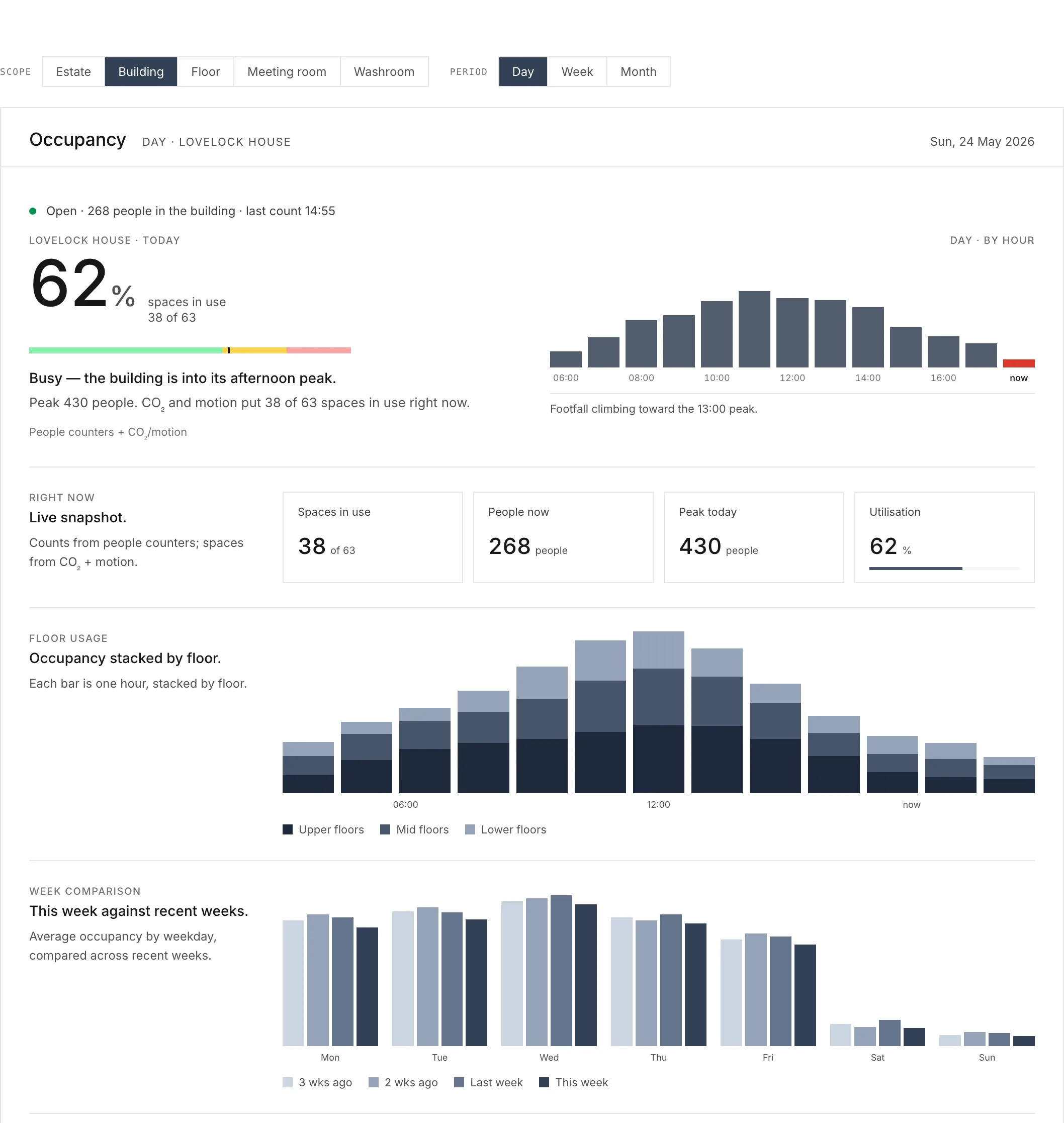
Occupancy data underpins half the other use cases on this page: BB101 ventilation rules assume the room is in use; boiler control runs to when people arrive; cleaning triggers when footfall crosses a threshold. The same PIR and people-counter feeds serve all of it.
Three capabilities, one feed.
Live count vs max
Per zone. Martyn's Law statutory cap evidence. Approaching the cap raises an entry-control alert. Over the cap = immediate escalation.
Cleaning + maintenance triggers
Footfall thresholds replace fixed schedules. Toilet block hit 200 visits since last clean — task created, sent to the team's chat.
Estate utilisation
Heat maps of how rooms actually get used over a term. Informs space planning, lettings strategy, and the boiler-control schedule.
85% of boiler hours across the fleet heating empty rooms. Occupancy data is what makes that visible — and what makes the savings possible.
It doesn’t stop at the screen.
The reading is checked against the rulebook on an orchestration engine. When it’s out of band the job is created, sent to the right person and chased until it’s signed off — and every step is logged. Here’s a real flow for occupancy.
Rules & flows on an orchestration engine · every action traceable to a line of config
The audit trail it builds.
One sensor stream. Multiple rulebooks. Each row links to the full entry in the Standards matrix.
Carry this on your estate?
Short call. We’ll scope what a v1 deployment looks like and walk through the standards we can prove the day it goes live.